
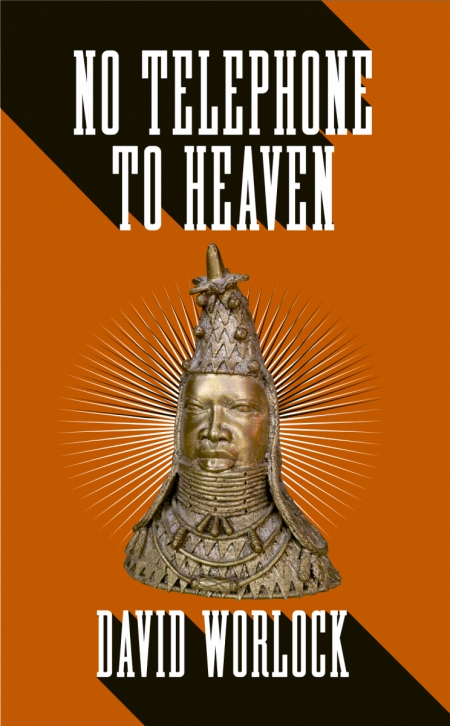

No Telephone to Heaven
Product Details
- Format:
- Paperback
- ISBN:
- 9781738497027
- Published:
- 20th Feb 2025
- Publisher:
- Marble Hill
- Dimensions:
- 326 pages -
- Categories:
Product Description
No Telephone to Heaven
Lagos 1977, the eve of FESTAC, Nigeria’s great celebration of African culture and arts. The body of a young man, Marcus Diello, is found. He has been brutally murdered.
Cyril, a police inspector dealing with his first murder case in the capital since arriving from Benin, faces pressures from his bosses who want the murder swept under the carpet - and from Marcus’s friends and colleagues who demand explanations. Why was an innocent life taken? Was it a ritual murder or robbery?
On the back of Lagos buses, it says: “God’s judgement, no appeal - no telephone to heaven.” With help from Marcus’s three friends and a young Englishman with his own secrets, Cyril is caught up in a world of power politics, gun-running, antiquities smuggling and African nationalism as he attempts to discover why an innocent man bled to death on a Lagos pavement in the early hours of the morning.
- David Worlock follows his moving memoir, Facing Up To Father, the pleasures and pains of a Cotswold childhood with a dive into crime fiction.
- Set in the 1970s, some years after the end of the civil war, this investigation into the murder of a young man is based on a true story.
- The unexplained death of Marcus Diello has haunted David over the decades. This is his solution to the mystery.
The story behind
One of the pleasures of being a publisher is that you never know what your authors will do next. I was both surprised - and not surprised - when David Worlock told me he had written a detective story. I had loved his touching, amusing and truthful account of his troubled relationship with his father, so well described in Facing Up To Father. A murder mystery set in Nigeria in 1977 seemed a long way from the Cotswolds in the 50s and 60s. As I read the manuscript and was immersed in this extraordinary and haunting story, I had endless questions. Was the story based on fact? How did David know so much about Nigeria? And of course - who did it?
So I asked him to tell me how he came to write the book.
“The young man’s death has puzzled me for almost 50 years. He was a young accountant in a Nigerian publishing company. I was a visiting English publishing Director from the group that owned his company. The slaying was brutal, unprovoked, and had no logical explanation. The police were indifferent: unexplained murder was commonplace. His colleagues were saddened and grief stricken, but then had to gather themselves for daily survival in a world where sudden death was not unfamiliar.
I loved the country and I loved the people, then as now. So much was going on in that year – Africa’s greatest arts and culture festival ever; free education, for the first time for all Nigerian children, and the emergence of a nation from the shadows of a terrible Civil War, which had killed 3 million people. I cannot forget the excitement of those times, yet the unexplained death of a young man continued to rankle over the years. Finally, I concluded that if no story existed, which would explain what had happened then perhaps I had to create one.
A common slogan on the back of Lagos buses in 1977 was the claim “God’s judgement – no appeal“ . Below these words, on the bumper bar, appeared the statement “ no telephone to heaven.“ I acknowledge that I cannot make a call to find out what happened to the young accountant, but given that robbery, international espionage, communal violence, gun, running, and antiquities smuggling are all part of the story that I have emerged with, there seem to be plenty of answers here on Earth.”
At the heart of his passion for a country he knew well lies a mystery - why was Marcus Diello so brutally murdered? The mystery persists to this day. This is David Worlock’s answer - is it purely fiction? Or is it based on fact?Like all good mysteries, readers will have to make up their own minds.
Francis Bennett
Reviews